
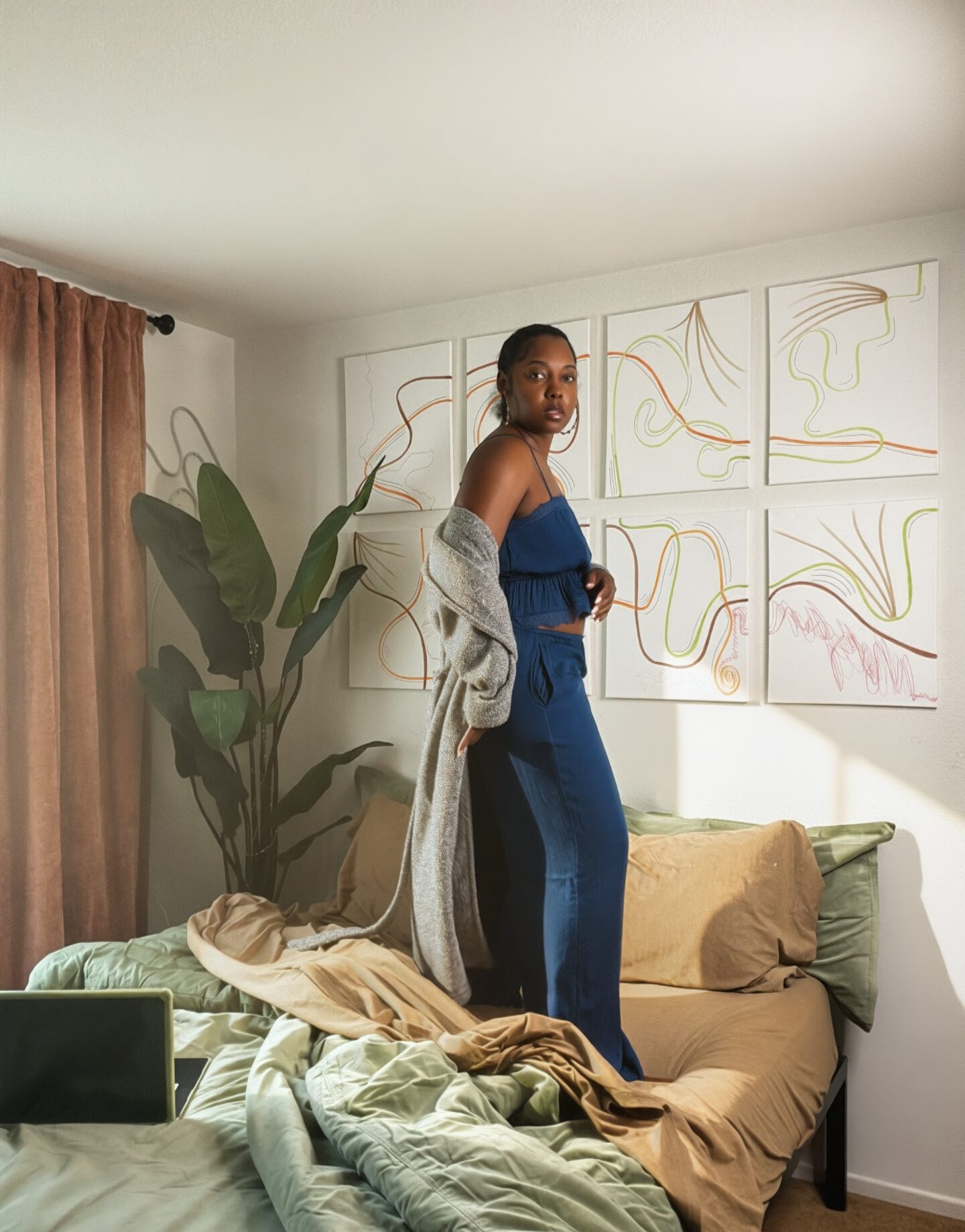
The room I had before wasn’t wrong. It just wasn’t an earth tone bedroom. That’s important to say.
Black comforter. Black pillows. Dark print sheets. Black curtains. Darker art on the wall. It was calm, sleek, and completely intentional. I chose every piece of it. It did exactly what I needed it to do at the time.
Then something shifted. Not in the room. In the season. Summer in LA, specifically in the high desert, comes early and comes hard. The light changes. The heat peaks before 9am. And I started noticing that I wanted to wake up differently. Not better. Differently. More awake. Still sleek, still adult, still nothing that performs or announces itself. But lighter.
So I edited. Not because the dark palette was wrong. Because I knew what I wanted next.
WHAT I HAD (AND WHY IT WORKED)
A dark bedroom done right is one of the most underrated spaces you can build. Not gothic, not dramatic for the sake of it. Just black on black with intention.
The all-dark room works because it removes visual noise completely. There’s nothing competing. Nothing to process. You walk in and your nervous system settles. That’s not an accident. That’s the point of a room.
For a long time, that’s what I needed. A room that asked nothing of me.
WHAT CHANGED (THE SEASONAL TRIGGER)
The edit wasn’t driven by trend. It was driven by timing.
A few days out from summer, with the high desert heat already announcing itself through the windows before I’m fully awake, I wanted a room that met me differently in the morning. Something that said awake without saying loud. Something that could build as the season does, not fight it.
That’s what started the swap.
EDIT: WHAT STAYED, WHAT WENT, WHAT CAME IN
What left: Black comforter, black pillows, dark print sheets, black curtains, darker wall art.
Not disposed of impulsively. Assessed, removed, done.
What came in:
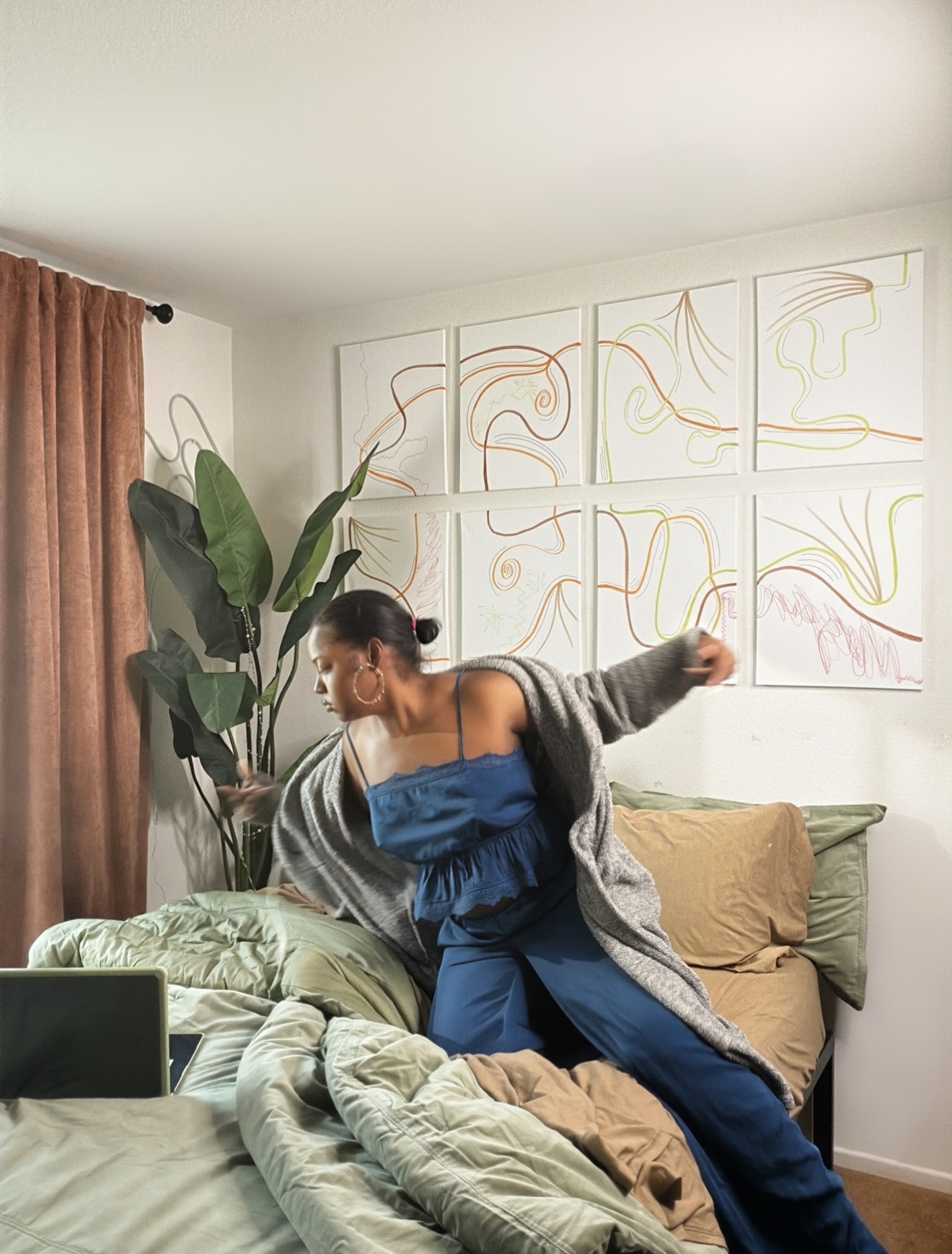
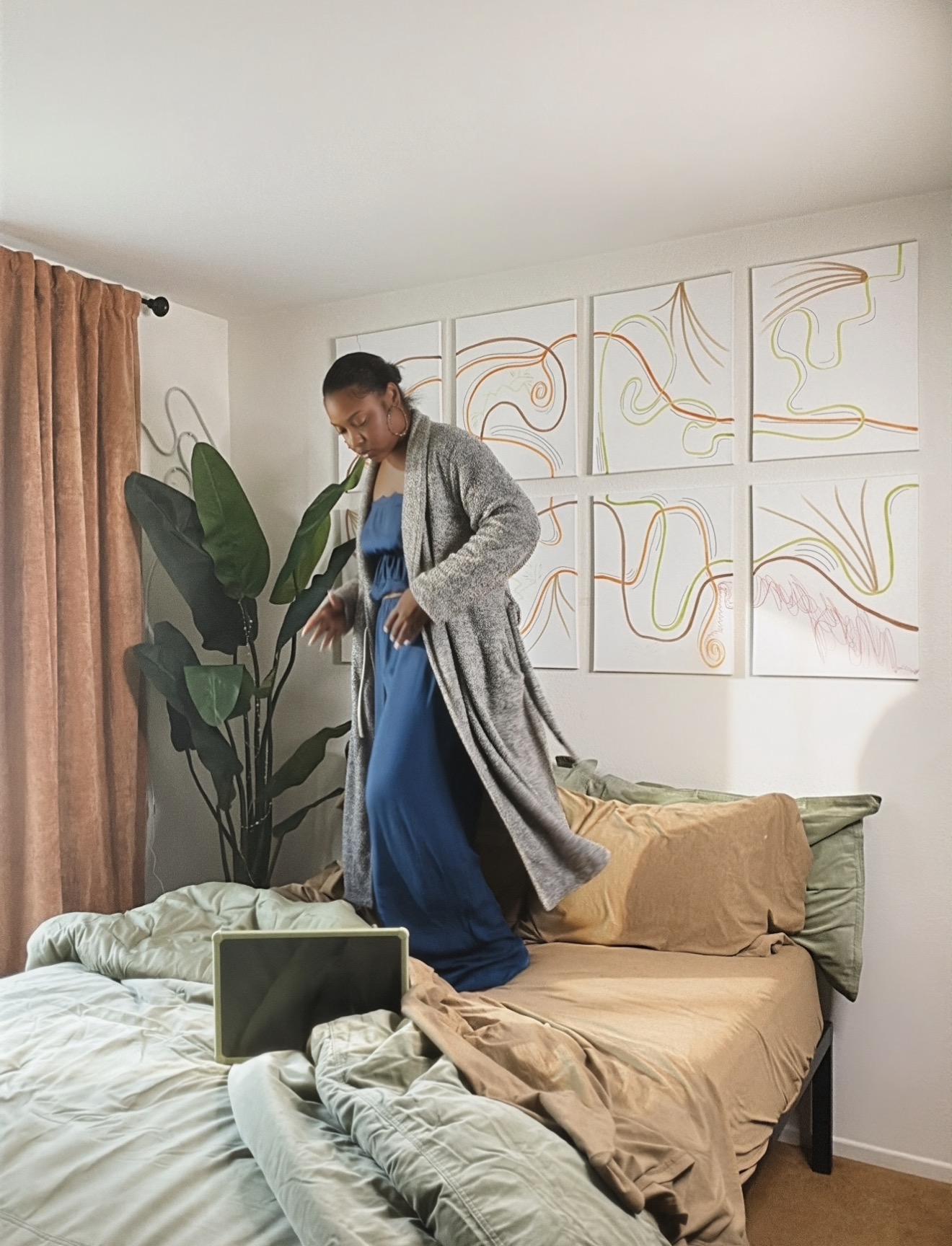
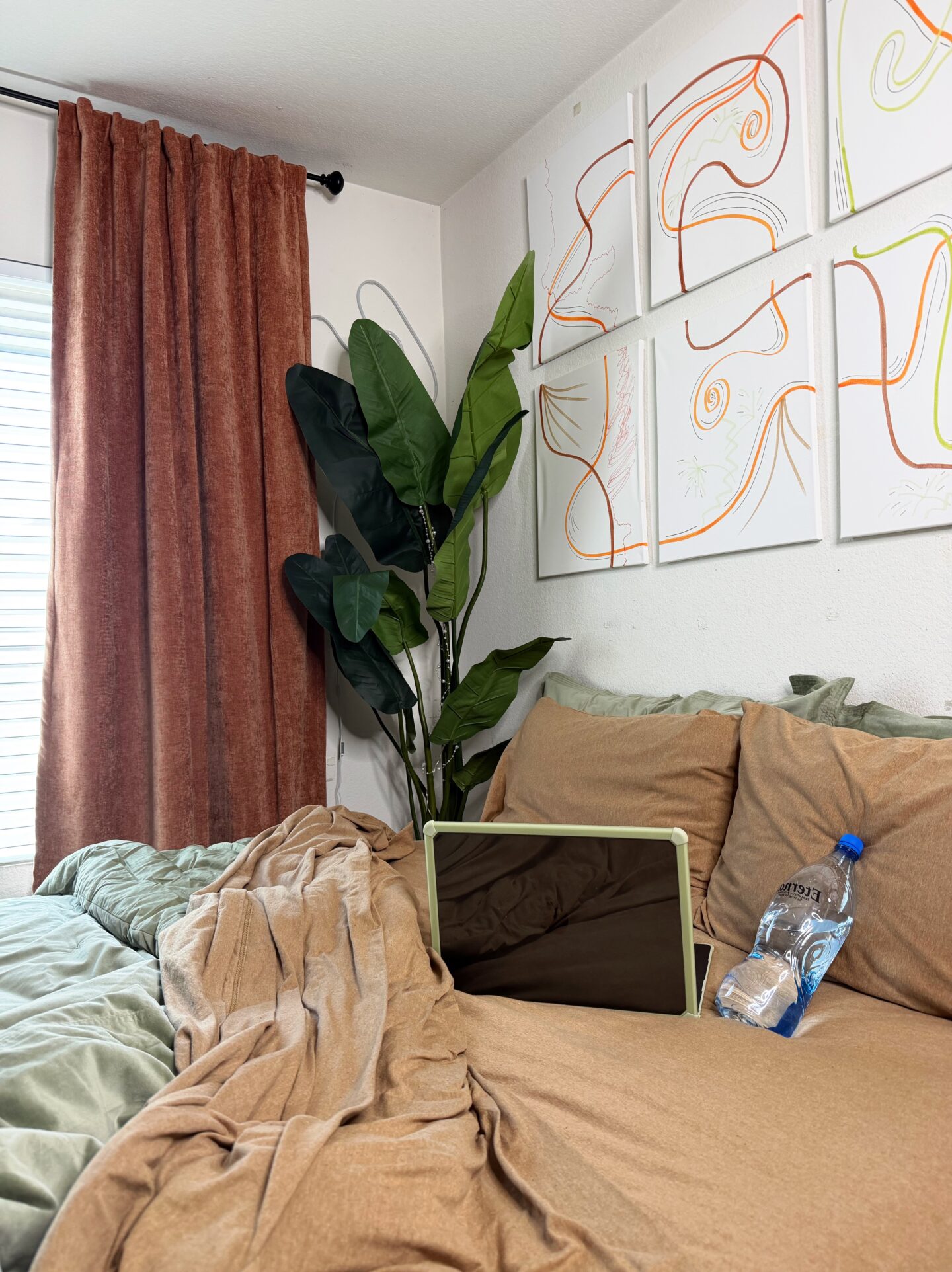
- Pistachio/sage green micro suede comforter. The anchor. The decision everything else follows.
- Caramel and tan pillow layering. The mid-tone that keeps the room from reading too cool.
- Textured blackout curtains, terracotta, warm. And functional: the high desert doesn’t care about your aesthetic. Blackout in summer is non-negotiable.
- Abstract line art on the wall. Orange, green, red-brown on white. Made by me.
What stayed:
- The faux plant. Already had it. It earned its place in both rooms.
That last point matters. The L’HEIR edit isn’t about replacing everything. It’s about knowing what doesn’t need to be replaced. The plant was right before. It’s still right now. Done.
THE ART
The wall is a eight-panel grid of line art I made. Abstract, organic. Loose curves in ochre, warm green, red-brown on white.
I’m not going to pretend that having art you made yourself isn’t different from art you purchased. It is. It holds the room in a way that a print doesn’t. Not because it’s technically superior, but because it’s specific. It came from somewhere. You can feel that.
If you’re building a space and the wall isn’t landing, the question worth asking isn’t “what should I hang here.” It’s “what do I already have that belongs here.” Sometimes that’s a sketch you made in 2019. Sometimes it’s three photographs you’ve never framed. The right answer is almost never “go buy art.”
EARTH TONES AS A SEASONAL CHOICE
What I have now isn’t a permanent installation. That’s the thing about an edit. It can move.
The pistachio and sage and terracotta and caramel read warm in the morning light, cool enough in the afternoon heat, and grounded at night. They work for summer in a way the all-black room didn’t. Not because dark is wrong in summer, but because I wanted to build as the season builds. Lighter. More open. Still contained.
By fall, something might shift again. Maybe the curtains. Maybe a layer. The bones stay.
That’s how a space should work. Not decorated once and frozen. Edited as the life in it changes.


Getting dressed for your own space is still getting dressed.
That goes for the room too. The choices you make about where you sleep, the texture, the palette, the objects, those are decisions. They shape how you start the day. How you end it.
The dark room was a decision. The edit to earth tones was a decision. Neither was an accident, neither was a trend, and neither required more than clarity about what I actually wanted.
The same thinking applies to everything I buy. The five things I actually repurchase every year starts there.
That’s the whole practice.
The L’HEIR newsletter is where I do this in real time — spaces, objects, the decisions behind them. Subscribe below.
