
by Morgan Ashley
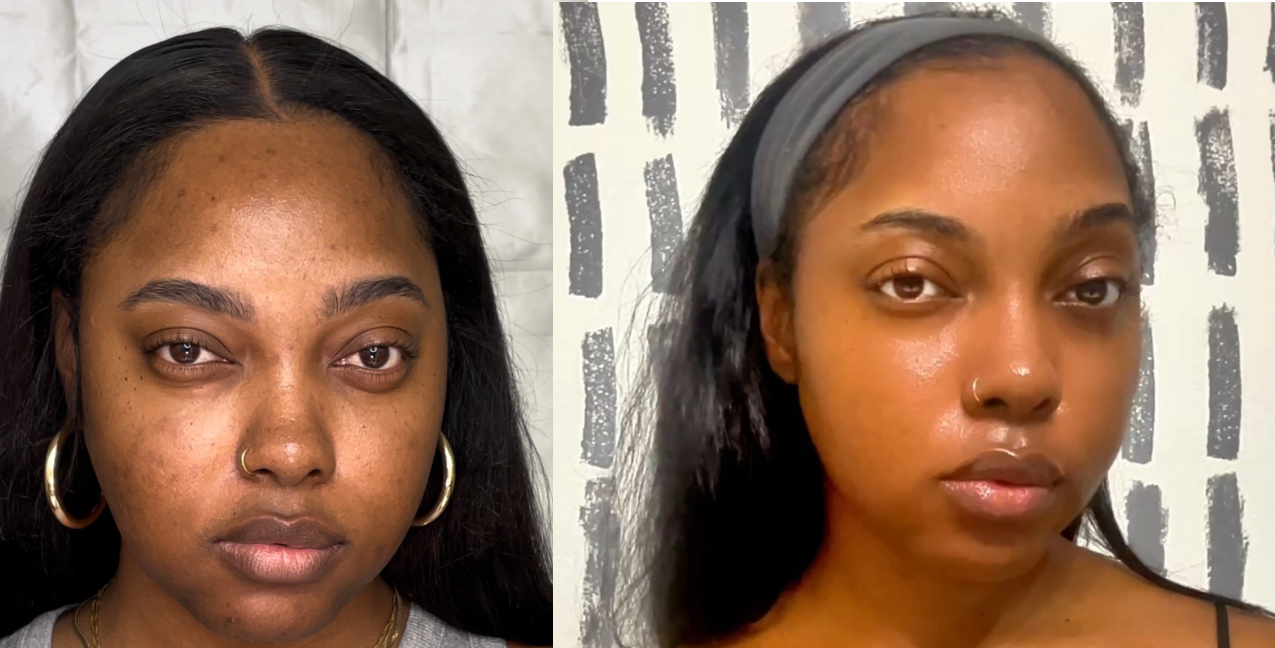
If your hyperpigmentation got worse in your 40s, you are not doing something wrong. You are experiencing something specific, and it has a specific explanation.
The dark spots that were manageable in your 30s, the uneven tone you could address with a targeted product and patience, the marks that used to fade in a few months: in your 40s, the timeline changes. The spots deepen. New ones appear without obvious cause. The fade is slower. The products that worked before seem less effective.
This is not your imagination. And it is not permanent.
Why Hyperpigmentation Gets Worse on Dark Skin Over 40
Cell turnover slows. In your 20s, your skin renews itself roughly every 28 days. In your 40s, that cycle lengthens to 45-60 days or more. Pigmented cells that would have shed in a month now stay on the surface for two months. Dark marks that used to fade in eight weeks now take four to six months. The hyperpigmentation has not worsened. It is just staying visible longer.
Hormonal shifts change melanin production. Perimenopause and the hormonal fluctuations that accompany it directly affect melanin-producing cells. Estrogen plays a role in regulating melanocyte activity, and as estrogen levels shift in your 40s, melanin production can become more reactive and less predictable. Melasma, which is hormonally triggered, can appear for the first time or worsen during this period. It looks different than post-inflammatory hyperpigmentation and responds to different interventions.
Cumulative sun damage surfaces. The UV exposure from your 20s and 30s, even with melanin’s natural protection against UV radiation, has been accumulating. In your 40s, that accumulated damage begins to manifest as visible dark spots and uneven tone. Your melanocytes have been working to protect your skin for decades, and the evidence of that work becomes visible. Daily SPF going forward determines whether the next decade continues the accumulation or begins to address it.
The barrier is weaker. A compromised skin barrier is both more reactive to hyperpigmentation triggers and less able to support the actives that address them. Over-exfoliation, harsh products, too many stacked actives: in your 40s, the same level of routine stress that was tolerable in your 30s may now be creating PIH.
What Does Not Work
Aggressive brightening treatments without addressing the trigger. If you are applying vitamin C every morning and azelaic acid every night while also over-exfoliating and skipping SPF, the brightening ingredients are working against an active trigger. The hyperpigmentation will not improve. Address the cause before you address the evidence.
Too many actives at once. Stacking brightening ingredients creates a compounding irritation risk for melanin-rich skin. Each individual ingredient may be appropriate. Together, without adequate barrier support, they can create more PIH than they treat.
Expecting fast results. Hyperpigmentation on melanin-rich skin over 40 responds to the long game. Six to twelve months of consistent treatment with the right ingredients is a realistic timeline. Products that promise rapid dramatic results are typically delivering irritation or surface-level changes that do not last.
What Actually Works
SPF, every morning, without exception. This is the first intervention, not the last. You cannot meaningfully address hyperpigmentation while sun exposure continues to deepen it. Tinted mineral formulas work on melanin-rich skin. The excuse of white cast is outdated.
Niacinamide. Reduces inflammation, strengthens the barrier, and inhibits the transfer of melanin to skin cells. One of the most effective and best-tolerated ingredients for hyperpigmentation on melanin-rich skin because it addresses the problem without creating new irritation.
Azelaic acid. Specifically well-suited for melanin-rich skin because it inhibits abnormal melanin production without the irritation risk of stronger alternatives like hydroquinone. Works steadily over time. Pairs well with niacinamide.
Tranexamic acid. Increasingly well-researched for hyperpigmentation, particularly melasma. Works through a different mechanism than vitamin C or azelaic acid, making it a useful addition for stubborn pigmentation.
Vitamin C. Effective for brightening and antioxidant protection, but requires a stable barrier to use without irritation. If your barrier is compromised or you are experiencing active PIH, stabilize the barrier before adding vitamin C.
Retinol, slowly and carefully. Increases cell turnover, which addresses the slow-fade problem directly. Requires a stable barrier, a cautious introduction, and daily SPF. Read the full retinol guide for the specific approach for melanin-rich skin.
Patience. The most consistent variable in effective hyperpigmentation treatment is time. A stable, correct routine applied consistently over six to twelve months will address hyperpigmentation more effectively than product-hopping in search of faster results.
The Difference Between PIH and Melasma
Post-inflammatory hyperpigmentation is the dark mark left after inflammation: a breakout, a scratch, a reaction to an irritating product. It typically appears as a discrete spot and fades with time, sunscreen, and appropriate actives.
Melasma is hormonally driven and typically appears as a larger, more diffuse area of pigmentation, often on the cheeks, forehead, or upper lip. It is more stubborn and more sensitive to UV exposure. Melasma requires a specific approach and does not always respond to the same interventions as PIH. If you suspect melasma, a dermatologist consultation is worth it.
Read the full framework in the skincare for melanin-rich skin over 40 cornerstone. For the sunscreen step that underpins everything else, read sunscreen for melanin-rich skin.
Morgan Ashley is the founder of L’HEIR, an editorial lifestyle brand for women who buy less and choose better.
