
by Morgan Ashley
The word “anti-aging” is exhausting. Not because aging is something to apologize for, but because the phrase has always been selling a lie: that you can stop something that is not a problem. A skin longevity routine is the more honest version of the conversation. Rather than reversing, it is about building a foundation that holds — and knowing the difference between what your skin actually needs and what the beauty industry has convinced you is necessary.
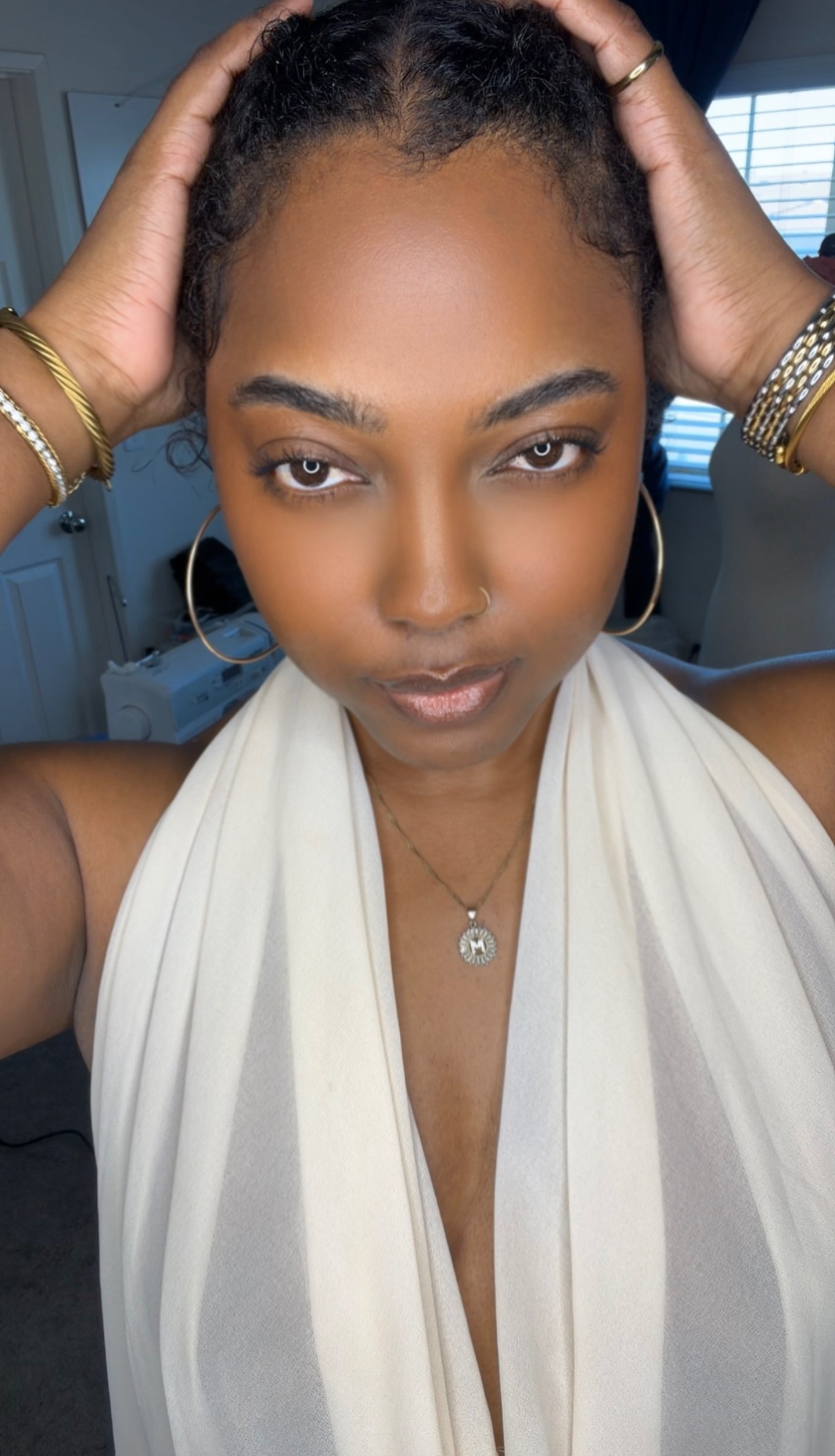
I am 40, 41 in July. My skin is the best it has ever looked. Not because I found a miracle product or started a 12-step routine, but because I stopped chasing and started editing.
This is my current shelf. Six products. One gap I’m actively working on. No filler.
The Edit
1. Thayers Witch Hazel Pore Refining Pads
The most affordable thing in my routine and the one I would least want to give up. I use these to prep: they tone, they tighten, and they remove whatever my cleanser left behind without stripping anything. The pore-refining version is the one. Not the rose water, not the original. This one.
For melanin-rich skin specifically, witch hazel can be too harsh at full strength. Thayers keeps it balanced. I’ve never had a reaction.
2. La Roche-Posay Moisturizer
La Roche-Posay understands that the barrier is everything. This is the brand dermatologists actually recommend, not aspirationally but consistently. I use their moisturizer daily because it does the work without trying to do too much. No fragrance, no unnecessary actives. Just a solid, well-formulated base.
At 40, moisture retention is the longevity play. This is where I anchor the routine.
3. Caudalie Grape Water
This lives next to my desk, in my bag, and in my bathroom. Caudalie’s grape water is what I reach for mid-day when my skin needs resetting without product layering. Not a toner, not a serum. Simply what it says: antioxidant-rich, French, and unreasonably effective for something that simple.
More than anything, this is the product that changed how I think about the routine in general. Sometimes the answer is mist and move on.
4. Eadem Lip Balm
Eadem was built specifically for skin of color, and it shows in every formula they make. The lip balm is the entry point, but the brand is worth knowing at every level. For the lips: rich without being heavy, restorative without feeling medicinal. I don’t use anything else.
Supporting a Black-founded brand that is doing the formulation work correctly is not a purchasing philosophy. It is a skincare decision. The products are better because the research is specific.
5. Good Molecules Azelaic Acid (rotating out)
I have been using azelaic acid for hyperpigmentation and texture. Good Molecules is accessible and effective at the entry level. However, I have outgrown this concentration and am in the process of upgrading to a higher-strength formula that better matches where my skin is now.
The rotation is not a failure of the product. It is the point of editing: you start where you are and you refine as you learn. If you are new to azelaic acid, Good Molecules is the right starting place. When your skin is ready for more, you will know.
Mandelic acid is in the same position for me: useful and mild, but I am ready for something with more specificity.
6. Haruharu Wonder Black Rice Toner
This is one of the cleanest toners I have found for what it claims to do. Black rice ferment, niacinamide, panthenol: the ingredient list is doing actual work, not decoration. It layers well, absorbs quickly, and leaves nothing sticky behind.
K-beauty at its best focuses on what the product does to your barrier, not what it adds on top of it. This toner follows that logic exactly.
The Gap: What I’m Still Building
Two things I do not have yet that the routine needs:
A retinol. I have been intentional about waiting until the rest of the routine was stable before introducing a retinol, because retinoids require a healthy barrier to do their job without causing damage. The barrier is solid now, so a retinol is next. I am currently researching the right entry point for darker skin tones, where photosensitivity and post-inflammatory hyperpigmentation risk require a more careful selection process than the general “start with .025%” advice accounts for.
A better serum. The azelaic and mandelic acids are doing serum-level work, but I want a dedicated vitamin C or peptide serum in the rotation. The upgrade is in process.
I am telling you this because the longevity edit is not a finished shelf. Rather, it is an ongoing practice. The goal is not to have the perfect routine. It is to be a precise editor of what goes in it.
Why the Skin Longevity Routine Has to Be Edited
A skin longevity routine is not about adding. It is about understanding what your skin actually needs versus what the beauty industry has convinced you is necessary.
Most people’s routines are too long. Not because the products are wrong, but because the logic is accumulation instead of curation. More steps, more actives, more products. As a result, the barrier gets consistently overwhelmed and never allowed to do its own work.
The same buy-less filter I apply to everything else applies here: one thing that does its job well is worth ten things chasing each other. Each of the six products on my shelf has a clear purpose, earns its place daily, and does not conflict with anything next to it.
At 40, I am not trying to look younger. I am investing in skin that is resilient, even, and cared for. That is the skin longevity routine: not a dermatologist’s budget or sixteen steps, but knowing exactly what you need and refusing to buy anything else.
Morgan Ashley is the founder of L’HEIR, an editorial lifestyle brand for women who buy less and choose better. She lives in Los Angeles.
